


How Post Spacing Affects Your Deck’s Sightlines
Deck Railing Styles, Railing Systems | July 6, 2026

You built your deck for the view. Whether that’s a lake, a garden, a mountain ridgeline, or simply a backyard that feels like your own private retreat, the last thing you want is a wall of posts cutting across it. At Vista Railings, we work with homeowners who care deeply about what they see from their outdoor living spaces, and one of the most overlooked decisions in any railing project is post spacing. Get it right during the planning phase, and your railing becomes part of the scenery. Get it wrong, and it becomes the scenery.
Learn how to adapt railing systems for sloped properties.
Why Post Spacing Matters More Than You Might Think
Most homeowners assume post placement is purely a structural call, something the installer handles automatically. In reality, post spacing sits at the intersection of code compliance, railing system design, and your personal sightline priorities, and you have more input into it than you probably realize.
The spacing between posts determines how many vertical interruptions appear across your view. Fewer posts mean wider open “windows” that let your eye travel past the railing rather than stopping at it. More posts create a rhythmic pattern that, at certain angles, produces a strobing effect as you move your head, pulling attention back to the railing itself.
One of the advantages of premium aluminum railings are that they are engineered as a “complete system” and thereby provide the opportunity to achieve wider spacing between posts than traditional wood builds while still meeting code mandated load requirements.
Sitting Down Changes Everything
Here’s something most railing guides skip entirely: the sightline that matters most on a deck is the seated one.
Standing, your eye naturally clears the top rail, and the posts become a lower frame. Seated, though, you’re looking directly through the infill zone, and post placement shapes your entire view from that position. If your furniture arrangement puts your primary seating facing the best part of your view, designing post spacing around that sightline is one of the smartest moves you can make.
Before finalizing any railing layout, work through a few questions.
- Where will your chairs, sectional, or dining table sit?
- What direction does that seating face?
- Are there specific focal points (a water feature, a tree line, a neighbour’s garden you’d rather not see) that post placement could frame or block?
Bringing these answers to your planning conversation with a dealer makes a meaningful difference in the final result.
How Your Railing System Type Shapes the Equation
Post spacing considerations aren’t one-size-fits-all. The infill material between your posts changes how much each post is noticed and what spacing strategies make the most sense.
Picket Railings
With aluminum picket systems, posts and balusters share a similar visual weight. At tighter spacings, the overall railing reads as a solid barrier. Wider post spacing opens up the rhythm, but the picket pattern itself still creates a textured visual layer rather than a clear view through.
Glass Railings
Glass infill fundamentally changes the role of the post. Since the panels are transparent, your sightline flows through the railing rather than stopping at it. Posts become discrete vertical accents rather than barriers. Standard spacing still delivers a dramatically more open feel compared to traditional systems, and our glass railing options are specifically designed with that unobstructed view in mind.
Cable Railings
Cable systems run horizontal lines between posts, keeping the vertical elements to a minimum. Here, post spacing becomes especially significant because the posts are the only solid vertical interruptions in your view. Thinner post profiles reduce visual mass, and wider spacing between them results in sightlines that feel genuinely open even from a seated position.
Making Smart Spacing Decisions Before You Order
The post spacing decision needs to happen before materials are ordered, not after. Once a system is spec’d and shipped, your layout options narrow considerably.
A few practical steps to get this right from the start:
- Identify your primary sightline. Stand and sit at the spots where you’ll spend the most time, and note exactly what you’re looking at.
- Choose your system type based on view priority. If preserving an open view is your top goal, glass or cable systems offer the most flexibility.
- Talk through spacing with your dealer. Our dealer network exists precisely for this kind of planning conversation. They can help you balance your aesthetic goals against structural requirements and local building codes.
- Think about colour. Darker post finishes tend to recede visually against outdoor backdrops, while lighter finishes stand out. Finish choice and spacing work together.
Your View Deserves the Right Plan
Post spacing is one of those decisions that looks invisible when done well and impossible to ignore when done poorly. The good news is that modern aluminum railing systems give you real options, and with the right guidance during the design phase, you can protect both the safety of your deck and the sightlines that make it worth being on. If you’re in the planning stages and want to talk through which railing system fits your view, give us a call at 1-800-667-8247. We’ll help you find the configuration that keeps the view where it belongs: front and centre.

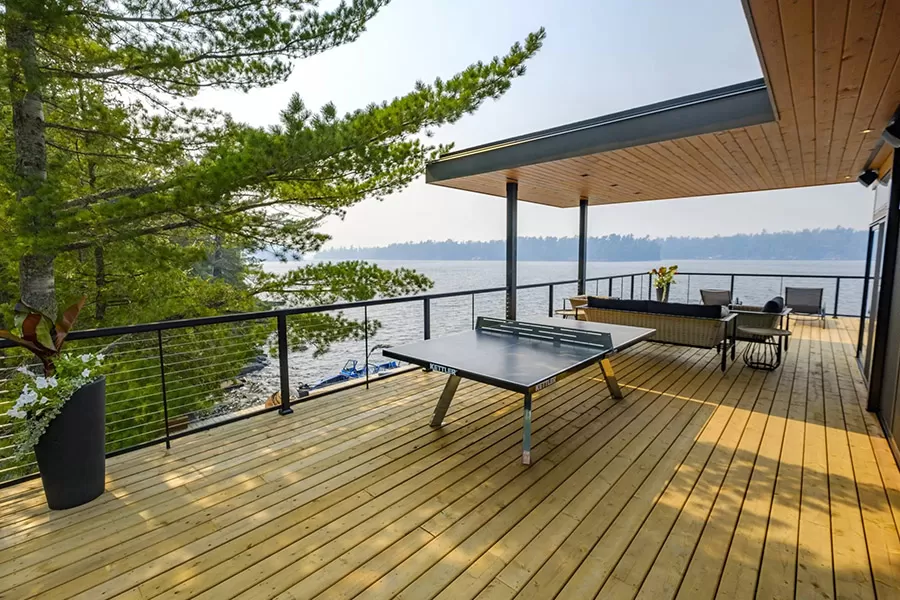
You built your deck for the view. Whether that’s a lake, a garden, a mountain ridgeline, or simply a backyard that feels like your own private retreat, the last thing you want is a wall of posts cutting across it. At Vista Railings, we work with homeowners who care deeply about what they see from their outdoor living spaces, and one of the most overlooked decisions in any railing project is post spacing. Get it right during the planning phase, and your railing becomes part of the scenery. Get it wrong, and it becomes the scenery.
Learn how to adapt railing systems for sloped properties.
Why Post Spacing Matters More Than You Might Think
Most homeowners assume post placement is purely a structural call, something the installer handles automatically. In reality, post spacing sits at the intersection of code compliance, railing system design, and your personal sightline priorities, and you have more input into it than you probably realize.
The spacing between posts determines how many vertical interruptions appear across your view. Fewer posts mean wider open “windows” that let your eye travel past the railing rather than stopping at it. More posts create a rhythmic pattern that, at certain angles, produces a strobing effect as you move your head, pulling attention back to the railing itself.
One of the advantages of premium aluminum railings are that they are engineered as a “complete system” and thereby provide the opportunity to achieve wider spacing between posts than traditional wood builds while still meeting code mandated load requirements.
Sitting Down Changes Everything
Here’s something most railing guides skip entirely: the sightline that matters most on a deck is the seated one.
Standing, your eye naturally clears the top rail, and the posts become a lower frame. Seated, though, you’re looking directly through the infill zone, and post placement shapes your entire view from that position. If your furniture arrangement puts your primary seating facing the best part of your view, designing post spacing around that sightline is one of the smartest moves you can make.
Before finalizing any railing layout, work through a few questions.
- Where will your chairs, sectional, or dining table sit?
- What direction does that seating face?
- Are there specific focal points (a water feature, a tree line, a neighbour’s garden you’d rather not see) that post placement could frame or block?
Bringing these answers to your planning conversation with a dealer makes a meaningful difference in the final result.
How Your Railing System Type Shapes the Equation
Post spacing considerations aren’t one-size-fits-all. The infill material between your posts changes how much each post is noticed and what spacing strategies make the most sense.
Picket Railings
With aluminum picket systems, posts and balusters share a similar visual weight. At tighter spacings, the overall railing reads as a solid barrier. Wider post spacing opens up the rhythm, but the picket pattern itself still creates a textured visual layer rather than a clear view through.
Glass Railings
Glass infill fundamentally changes the role of the post. Since the panels are transparent, your sightline flows through the railing rather than stopping at it. Posts become discrete vertical accents rather than barriers. Standard spacing still delivers a dramatically more open feel compared to traditional systems, and our glass railing options are specifically designed with that unobstructed view in mind.
Cable Railings
Cable systems run horizontal lines between posts, keeping the vertical elements to a minimum. Here, post spacing becomes especially significant because the posts are the only solid vertical interruptions in your view. Thinner post profiles reduce visual mass, and wider spacing between them results in sightlines that feel genuinely open even from a seated position.
Making Smart Spacing Decisions Before You Order
The post spacing decision needs to happen before materials are ordered, not after. Once a system is spec’d and shipped, your layout options narrow considerably.
A few practical steps to get this right from the start:
- Identify your primary sightline. Stand and sit at the spots where you’ll spend the most time, and note exactly what you’re looking at.
- Choose your system type based on view priority. If preserving an open view is your top goal, glass or cable systems offer the most flexibility.
- Talk through spacing with your dealer. Our dealer network exists precisely for this kind of planning conversation. They can help you balance your aesthetic goals against structural requirements and local building codes.
- Think about colour. Darker post finishes tend to recede visually against outdoor backdrops, while lighter finishes stand out. Finish choice and spacing work together.
Your View Deserves the Right Plan
Post spacing is one of those decisions that looks invisible when done well and impossible to ignore when done poorly. The good news is that modern aluminum railing systems give you real options, and with the right guidance during the design phase, you can protect both the safety of your deck and the sightlines that make it worth being on. If you’re in the planning stages and want to talk through which railing system fits your view, give us a call at 1-800-667-8247. We’ll help you find the configuration that keeps the view where it belongs: front and centre.