

How to Build a Perfectly Level Deck (and Keep It That Way)
Deck Railings | December 15, 2025

Learning how to build a level deck isn’t just about appearance.
A level deck affects how it performs, how long it lasts, and how satisfied the homeowner will be years down the road. Many decks look great on installation day, but over time, they shift, sag, or become uneven. The key to avoiding this starts with what you can’t see: the framing.
If you want a deck that stays level long after it’s built, the framing system matters just as much as the surface boards.
Why decks lose their level over time
One of the biggest challenges with traditional wood deck framing is movement. Even when installed correctly, wood naturally reacts to its environment. Moisture, temperature changes, and seasonal shifts can all cause lumber to warp, twist, or shrink.
Over time, this movement can lead to uneven deck boards, poor drainage, stress on fasteners, and premature wear on the deck surface. This is frustrating for homeowners and often leads to callbacks for contractors.
Why the deck frame is so important
The deck frame is the foundation of the entire structure. If the frame moves, everything above it moves too. A stable frame keeps deck boards aligned, helps finishes last longer, and reduces the risk of future adjustments or repairs.
That’s why many builders are now looking beyond traditional wood framing and exploring aluminum deck framing as a long-term solution.
How aluminum deck framing helps keep a deck level
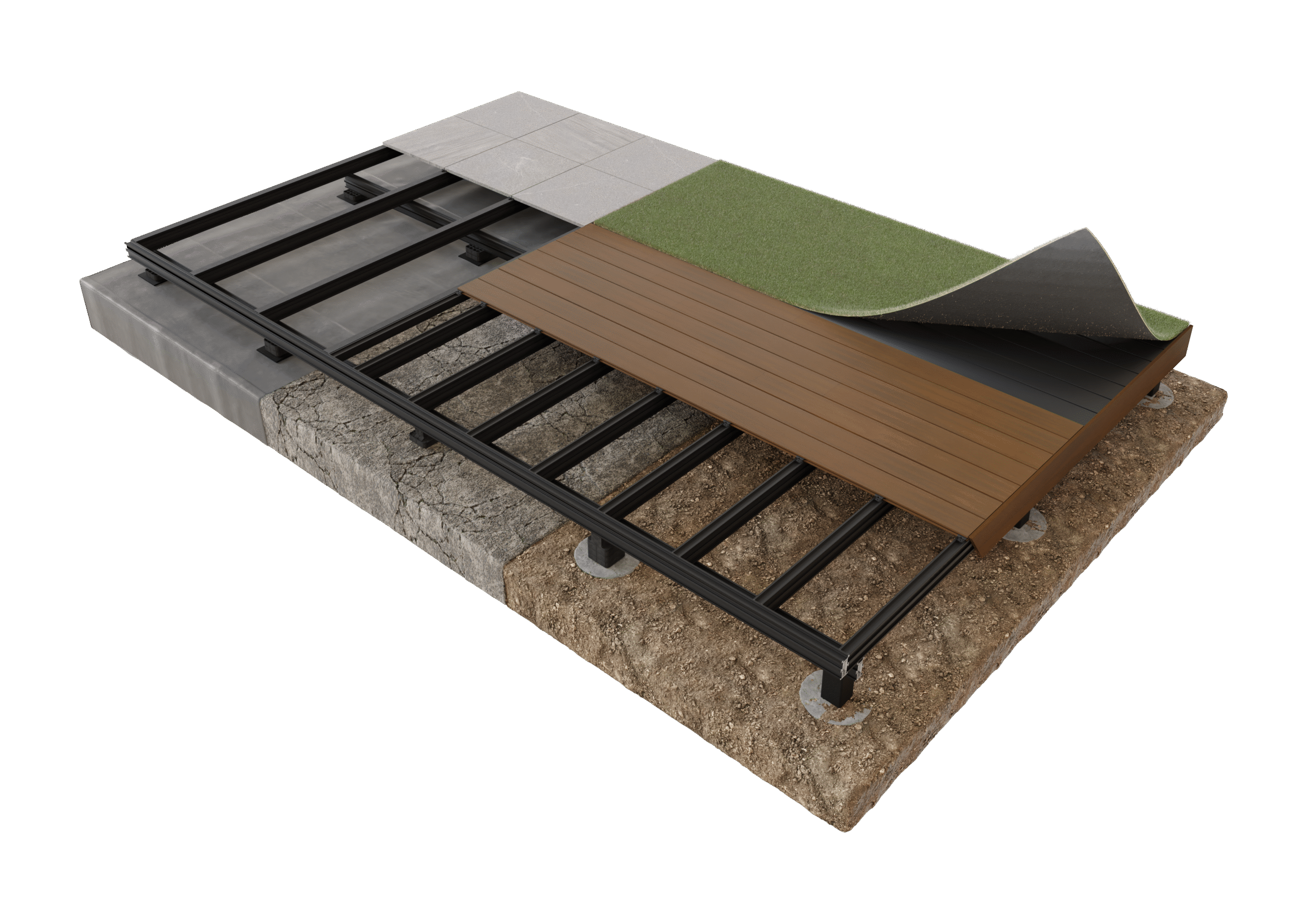
Aluminum deck framing systems, like Outdure QwickBuild, are designed to remain straight and stable for the life of the deck. Unlike wood, aluminum does not warp, twist, rot, or shrink. It is not affected by moisture and performs consistently in all seasons.
Once an aluminum frame is leveled during installation, it stays that way. This long-term dimensional stability is one of the biggest advantages of aluminum deck framing.
How to build a perfectly level deck using aluminum framing
Aluminum framing simplifies the leveling process from the start. Precision-engineered components make layout more consistent and predictable. Straight joists and beams make it easier to achieve a flat surface during installation, without fighting bowed or twisted material.
Because the frame does not move over time, the deck remains level year after year. This also helps protect surface boards, especially composite, PVC, and hardwood decking, which rely on a stable substructure to perform properly.
Where a perfectly level deck matters most
While aluminum deck framing works well for any project, it is especially beneficial for low-level decks, rooftop decks, multi-level designs, and large or high-end projects where precision is critical. In these applications, even small framing imperfections can become noticeable very quickly.
Build it once and keep it level
A deck should not require ongoing adjustments just to stay level. Choosing the right framing system from the beginning can eliminate many common issues associated with traditional wood construction.
Outdure QwickBuild Aluminum Deck Framing offers faster installation, long-term structural stability, and a lifetime warranty. Most importantly, it helps ensure your deck stays level for the life of the structure. Understanding how to build a level deck starts with choosing a framing system that will not shift, warp, or move over time.
If you’re planning a new deck or looking to upgrade your framing approach, aluminum deck framing is a smart investment in performance, durability, and peace of mind.

Learning how to build a level deck isn’t just about appearance.
A level deck affects how it performs, how long it lasts, and how satisfied the homeowner will be years down the road. Many decks look great on installation day, but over time, they shift, sag, or become uneven. The key to avoiding this starts with what you can’t see: the framing.
If you want a deck that stays level long after it’s built, the framing system matters just as much as the surface boards.
Why decks lose their level over time
One of the biggest challenges with traditional wood deck framing is movement. Even when installed correctly, wood naturally reacts to its environment. Moisture, temperature changes, and seasonal shifts can all cause lumber to warp, twist, or shrink.
Over time, this movement can lead to uneven deck boards, poor drainage, stress on fasteners, and premature wear on the deck surface. This is frustrating for homeowners and often leads to callbacks for contractors.
Why the deck frame is so important
The deck frame is the foundation of the entire structure. If the frame moves, everything above it moves too. A stable frame keeps deck boards aligned, helps finishes last longer, and reduces the risk of future adjustments or repairs.
That’s why many builders are now looking beyond traditional wood framing and exploring aluminum deck framing as a long-term solution.
How aluminum deck framing helps keep a deck level
Aluminum deck framing systems, like Outdure QwickBuild, are designed to remain straight and stable for the life of the deck. Unlike wood, aluminum does not warp, twist, rot, or shrink. It is not affected by moisture and performs consistently in all seasons.
Once an aluminum frame is leveled during installation, it stays that way. This long-term dimensional stability is one of the biggest advantages of aluminum deck framing.
How to build a perfectly level deck using aluminum framing
Aluminum framing simplifies the leveling process from the start. Precision-engineered components make layout more consistent and predictable. Straight joists and beams make it easier to achieve a flat surface during installation, without fighting bowed or twisted material.
Because the frame does not move over time, the deck remains level year after year. This also helps protect surface boards, especially composite, PVC, and hardwood decking, which rely on a stable substructure to perform properly.
Where a perfectly level deck matters most
While aluminum deck framing works well for any project, it is especially beneficial for low-level decks, rooftop decks, multi-level designs, and large or high-end projects where precision is critical. In these applications, even small framing imperfections can become noticeable very quickly.
Build it once and keep it level
A deck should not require ongoing adjustments just to stay level. Choosing the right framing system from the beginning can eliminate many common issues associated with traditional wood construction.
Outdure QwickBuild Aluminum Deck Framing offers faster installation, long-term structural stability, and a lifetime warranty. Most importantly, it helps ensure your deck stays level for the life of the structure. Understanding how to build a level deck starts with choosing a framing system that will not shift, warp, or move over time.
If you’re planning a new deck or looking to upgrade your framing approach, aluminum deck framing is a smart investment in performance, durability, and peace of mind.