
Treated Lumber vs. Aluminum Deck Framing: How to Choose the Right Option
Aluminum Deck Framing System, Aluminum Railings, Railing Systems | January 16, 2026

When planning a deck, most of the attention goes to surface boards, railings, and finishes. However, one of the most critical decision happens beneath your railings: the framing system. The choice between pressure-treated lumber and aluminum deck framing affects not only durability, but also installation time, labour costs, and long-term value.
The deck industry is evolving, and professionals who want to stay ahead of the market are rethinking how decks are built from the structure up. While pressure-treated lumber has long been the standard in deck construction, aluminum framing has emerged as a modern alternative designed to improve efficiency, performance, and long-term value. What was once seen as a higher-cost option often proves more economical when labour and total installed cost are taken into account.
This article explores the real differences between treated lumber and aluminum deck framing, and why more builders are rethinking how decks are framed today.
Why Comparing Material Cost Alone Can Be Misleading
A common mistake when comparing deck framing options is looking only at material pricing. Comparing a stack of wood to a stack of aluminum does not reflect the true cost of building a deck. Labour, time on site, installation complexity, and predictability all play a significant role in the final project cost.
Deck construction is labour-driven. Time spent sorting materials, making adjustments, coordinating layouts, and managing rework quickly adds up. When these factors are included, the perceived cost advantage of treated lumber often disappears.
Durability and Structural Reliability
Treated Lumber
Pressure-treated lumber is chemically treated to resist rot and insects, but it remains a natural material. Over time, wood is affected by moisture, leading to warping, twisting, shrinkage, and long-term movement. These changes can impact the structural integrity of the frame and affect deck boards, railings, and stairs installed above it.
Even with proper installation, wood framing is subject to environmental conditions that can shorten its lifespan and increase maintenance needs.
Aluminum Deck Framing
Aluminum deck framing is engineered for consistency and long-term performance. It does not rot, warp, crack, or attract insects, and it performs reliably in wet, coastal, and freeze-thaw environments. Because aluminum maintains its shape and strength over time, it often outlasts the deck surface itself.
For projects where durability and structural reliability are priorities, aluminum framing provides a stable, long-term solution.

Labour and Installation Time: The Biggest Cost Difference
Treated Lumber
Building a deck with treated lumber is labour-intensive. Crews typically spend time sorting through boards to find straight, usable pieces, managing inconsistent material, and making on-site adjustments to achieve proper alignment. Many framing steps require two installers working together, particularly when attaching joist hangers and maintaining spacing.
Because wood varies from board to board, layout and installation can take longer than expected. These added labour hours increase overall project costs and reduce efficiency, even when material pricing appears lower at the outset.
Aluminum Framing
Aluminum framing systems are designed to simplify installation and reduce labour. Components arrive straight, consistent, and ready for assembly, eliminating time spent sorting or correcting material. Joist connections are engineered for fast, secure installation without the need for two people holding components in place.
In addition, complete layouts and sizing information can be provided before installation begins, reducing on-site decision-making and rework. When labour is factored in, aluminum framing can significantly reduce total installation time and cost compared to traditional wood framing.
Design, Engineering, and Project Predictability
Treated Lumber
Wood framing often requires additional coordination during the design and construction phases. Layouts are frequently interpreted on site, and engineering review may occur after framing decisions have already been made. Adjustments during construction can lead to delays, added labour, and increased costs.
This lack of predictability can make scheduling and budgeting more challenging, especially on larger or more complex projects.
Aluminum
Modern aluminum framing systems provide a higher level of predictability. Layouts and sizing can be planned in advance, with point loads clearly defined for engineer review and approval. This streamlines the engineering process and reduces delays during construction.
Accurate material quantities and pricing can also be determined early, allowing builders to quote projects quickly and with confidence. The result is a more efficient workflow from design through installation.

Long-Term Value and Total Installed Cost
Treated Lumber
The primary advantage of treated lumber is its (in theory) lower upfront material cost. However, when labour, ongoing maintenance, potential repairs, and eventual replacement are considered, the total cost of the deck can be significantly higher than expected.
Aluminum
Aluminum framing delivers long-term value through faster installation, minimal maintenance, reduced callbacks, and consistent performance over time. When total installed cost is evaluated, aluminum framing is definitely more cost-effective than treated lumber.
As deck construction continues to evolve, builders are looking for framing solutions that prioritize speed, durability, and predictability. Systems like QwickBuild are designed to meet these needs by offering modular aluminum framing compatible with multiple deck surfaces, substrates, and height requirements — from low-level decks to elevated structures.
Aluminum framing is no longer just an alternative to wood: it is a strategic advantage.
At VISTA, we believe the structure beneath your deck matters just as much as what you see on top.
Contact us to get a Free Quote, and learn how QwickBuild aluminum deck framing can elevate your next project!


When planning a deck, most of the attention goes to surface boards, railings, and finishes. However, one of the most critical decision happens beneath your railings: the framing system. The choice between pressure-treated lumber and aluminum deck framing affects not only durability, but also installation time, labour costs, and long-term value.
The deck industry is evolving, and professionals who want to stay ahead of the market are rethinking how decks are built from the structure up. While pressure-treated lumber has long been the standard in deck construction, aluminum framing has emerged as a modern alternative designed to improve efficiency, performance, and long-term value. What was once seen as a higher-cost option often proves more economical when labour and total installed cost are taken into account.
This article explores the real differences between treated lumber and aluminum deck framing, and why more builders are rethinking how decks are framed today.
Why Comparing Material Cost Alone Can Be Misleading
A common mistake when comparing deck framing options is looking only at material pricing. Comparing a stack of wood to a stack of aluminum does not reflect the true cost of building a deck. Labour, time on site, installation complexity, and predictability all play a significant role in the final project cost.
Deck construction is labour-driven. Time spent sorting materials, making adjustments, coordinating layouts, and managing rework quickly adds up. When these factors are included, the perceived cost advantage of treated lumber often disappears.
Durability and Structural Reliability
Treated Lumber
Pressure-treated lumber is chemically treated to resist rot and insects, but it remains a natural material. Over time, wood is affected by moisture, leading to warping, twisting, shrinkage, and long-term movement. These changes can impact the structural integrity of the frame and affect deck boards, railings, and stairs installed above it.
Even with proper installation, wood framing is subject to environmental conditions that can shorten its lifespan and increase maintenance needs.
Aluminum Deck Framing
Aluminum deck framing is engineered for consistency and long-term performance. It does not rot, warp, crack, or attract insects, and it performs reliably in wet, coastal, and freeze-thaw environments. Because aluminum maintains its shape and strength over time, it often outlasts the deck surface itself.
For projects where durability and structural reliability are priorities, aluminum framing provides a stable, long-term solution.

Labour and Installation Time: The Biggest Cost Difference
Treated Lumber
Building a deck with treated lumber is labour-intensive. Crews typically spend time sorting through boards to find straight, usable pieces, managing inconsistent material, and making on-site adjustments to achieve proper alignment. Many framing steps require two installers working together, particularly when attaching joist hangers and maintaining spacing.
Because wood varies from board to board, layout and installation can take longer than expected. These added labour hours increase overall project costs and reduce efficiency, even when material pricing appears lower at the outset.
Aluminum Framing
Aluminum framing systems are designed to simplify installation and reduce labour. Components arrive straight, consistent, and ready for assembly, eliminating time spent sorting or correcting material. Joist connections are engineered for fast, secure installation without the need for two people holding components in place.
In addition, complete layouts and sizing information can be provided before installation begins, reducing on-site decision-making and rework. When labour is factored in, aluminum framing can significantly reduce total installation time and cost compared to traditional wood framing.
Design, Engineering, and Project Predictability
Treated Lumber
Wood framing often requires additional coordination during the design and construction phases. Layouts are frequently interpreted on site, and engineering review may occur after framing decisions have already been made. Adjustments during construction can lead to delays, added labour, and increased costs.
This lack of predictability can make scheduling and budgeting more challenging, especially on larger or more complex projects.
Aluminum
Modern aluminum framing systems provide a higher level of predictability. Layouts and sizing can be planned in advance, with point loads clearly defined for engineer review and approval. This streamlines the engineering process and reduces delays during construction.
Accurate material quantities and pricing can also be determined early, allowing builders to quote projects quickly and with confidence. The result is a more efficient workflow from design through installation.
Long-Term Value and Total Installed Cost
Treated Lumber
The primary advantage of treated lumber is its (in theory) lower upfront material cost. However, when labour, ongoing maintenance, potential repairs, and eventual replacement are considered, the total cost of the deck can be significantly higher than expected.
Aluminum
Aluminum framing delivers long-term value through faster installation, minimal maintenance, reduced callbacks, and consistent performance over time. When total installed cost is evaluated, aluminum framing is definitely more cost-effective than treated lumber.
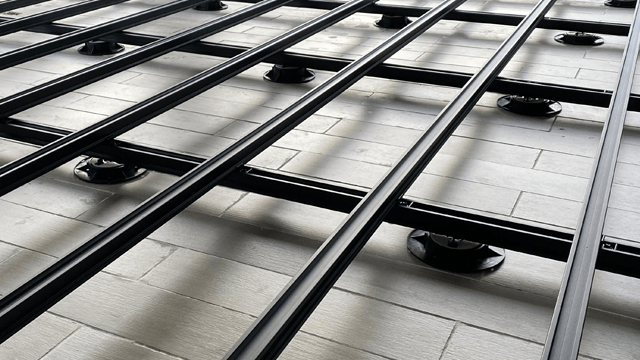
As deck construction continues to evolve, builders are looking for framing solutions that prioritize speed, durability, and predictability. Systems like QwickBuild are designed to meet these needs by offering modular aluminum framing compatible with multiple deck surfaces, substrates, and height requirements — from low-level decks to elevated structures.
Aluminum framing is no longer just an alternative to wood: it is a strategic advantage.
At VISTA, we believe the structure beneath your deck matters just as much as what you see on top.
Contact us to get a Free Quote, and learn how QwickBuild aluminum deck framing can elevate your next project!